
Not the End of the Bulgaria Golden Visa Program
Last Updated on October 18, 2026 by Bulgarian Citizenship Team
Why the Proposed Absence Rule Is Not the End of the Bulgaria Golden Visa Program
If you cannot relocate to Bulgaria, provide evidence of full-time employment or business commitments abroad. If that is not possible, consider relocating during Year 5, ahead of your permanent residence card renewal and potential citizenship application. Alternatively, eligible investors may explore Bulgarian citizenship by merit from Year 4.
International immigration consultants are already predicting the collapse of Bulgaria Golden Visa program. But are they analysing the legislation, or protecting their commissions?
The current draft legislation could introduce a new ground for reviewing permanent residence where an absence exceeding six months during the preceding year is established. Some international consultants have already declared this the end of the Bulgaria Golden Visa. Interestingly, Bulgarian investment funds generally pay much lower commissions than competing immigration products. Their objective is to operate as genuine investment vehicles, not commission-generating machines for international marketers. There is nothing wrong with commissions. This is business. But when commissions influence which country is recommended, investors should question whose interests their consultants are protecting.
What the Ministry of Interior Actually Confirmed
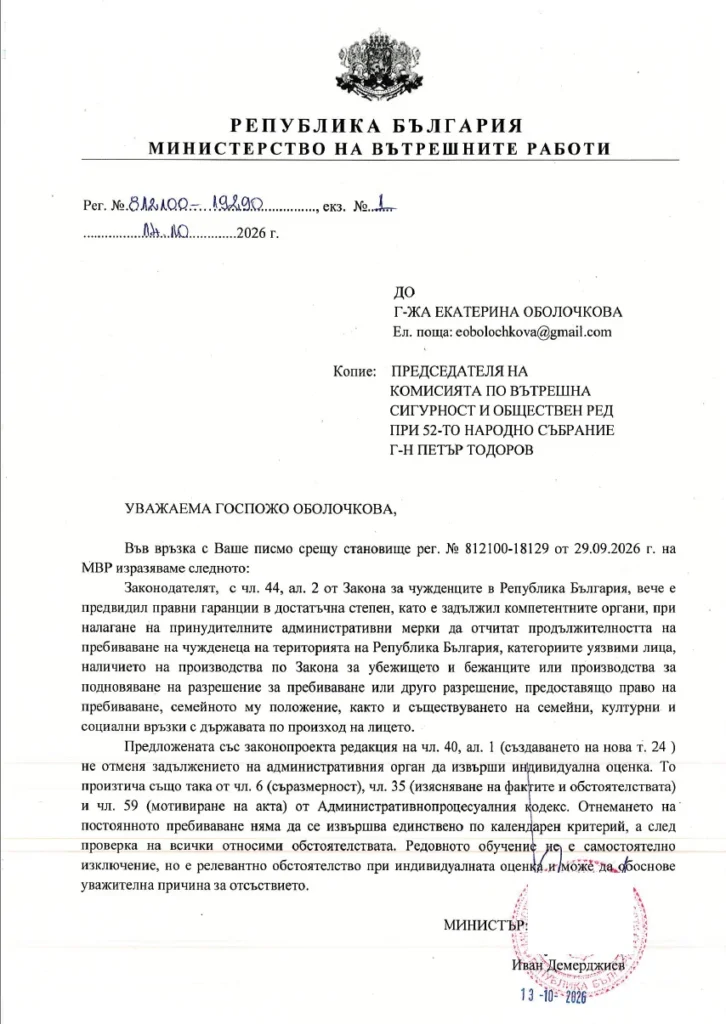
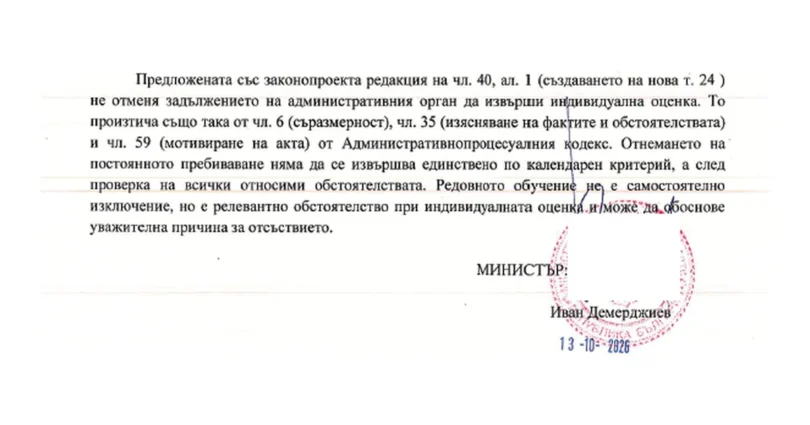
The Bulgarian Ministry of Interior has already confirmed in an official letter that the proposed absence requirement would not be applied merely by counting calendar days. Individual circumstances must be assessed. The Ministry specifically identified full-time education abroad as a legitimate explanation for an extended absence.
Same treatment is applied to full-time employment or managing an established business abroad. A university student cannot abandon their studies, just as an entrepreneur cannot simply abandon their company.
This is very different from the alarming claim that every investor must spend six months and one day in Bulgaria annually or automatically lose permanent residence. The proposed rule concerns an absence established for the preceding year, and the Ministry’s position makes clear that individual circumstances matter.
Six Months and One Day Every Year—or Only During the Preceding Year?
The proposed legislation suggests if established an absence of 6 months and 1 day for the preceding year, not absent for 6 months and 1 day annually. The absence must first be established by the competent migration authorities through the applicable administrative procedure.
One important milestone is the renewal of the permanent residence card, generally valid for five years. Although the authorities may examine compliance earlier, Year 5 is a natural point for reviewing the investor’s circumstances. Mere crossing borders or visiting Bulgaria does not trigger compliance as this is not with the powers of Border police, but review is done by Migration Police.
So why panic? If an investor cannot demonstrate full-time education, employment or business commitments abroad, relocating to Bulgaria during Year 5, ahead of the relevant assessment, may be a practical solution. The investor can establish genuine physical presence, enrol in a Bulgarian language course, develop stronger ties with the country and prepare for a successful citizenship application.
What some consultants describe as the end of the program could become an opportunity to optimise the investor’s path toward citizenship.
Citizenship by Merit: The Alternative Nobody Talks About
Bulgaria also has a citizenship-by-merit option, something international consultants rarely mention. Unlike Malta’s heavily promoted merit option, Bulgaria’s route is not intended as an affordable mass-market product that can be questioned later. It is reserved for individuals whose merits or contributions justify exceptional consideration.
But why should successful fund investors be allowed to do the merit option? Their capital contributes to the development of Bulgarian investment funds, businesses and the Bulgarian Stock Exchange. Many are accomplished entrepreneurs, financiers and businesspeople whose wealth was created through talent, expertise and years of hard work. Their achievements and economic contributions should not be underestimated.
Advocate Markov reserves the right to introduce eligible fund investors for consideration under Bulgaria citizenship by merit framework from Year 4, where their individual achievements and contributions justify an application.
Why Bulgaria Remains Underestimated
Portugal continues attracting investors despite substantial administrative delays and legislative uncertainty (hey 15 years to citizenship eligibility). Malta’s citizenship schemes have faced serious legal and reputational challenges and they continue (how a citizenship by merit can be advertised as a buy product? Even Caribbean states do not do that). Yet both destinations remain heavily marketed, while Bulgaria is cited only negatively.
Why? Perhaps because marketing follows commissions rather than the quality of the underlying investment opportunity. Bulgarian funds aim to invest capital in real financial assets and businesses, not distribute excessive commissions to international intermediaries.
The proposed amendments deserve proper legal analysis, not sensational predictions. Once finalised, they may provide greater clarity and a more predictable framework for investors over the coming years.
Bulgaria’s Golden Visa is not necessarily becoming less attractive. Perhaps the real problem is that Bulgaria’s investment funds are not sufficiently profitable for the international immigration marketing industry.
